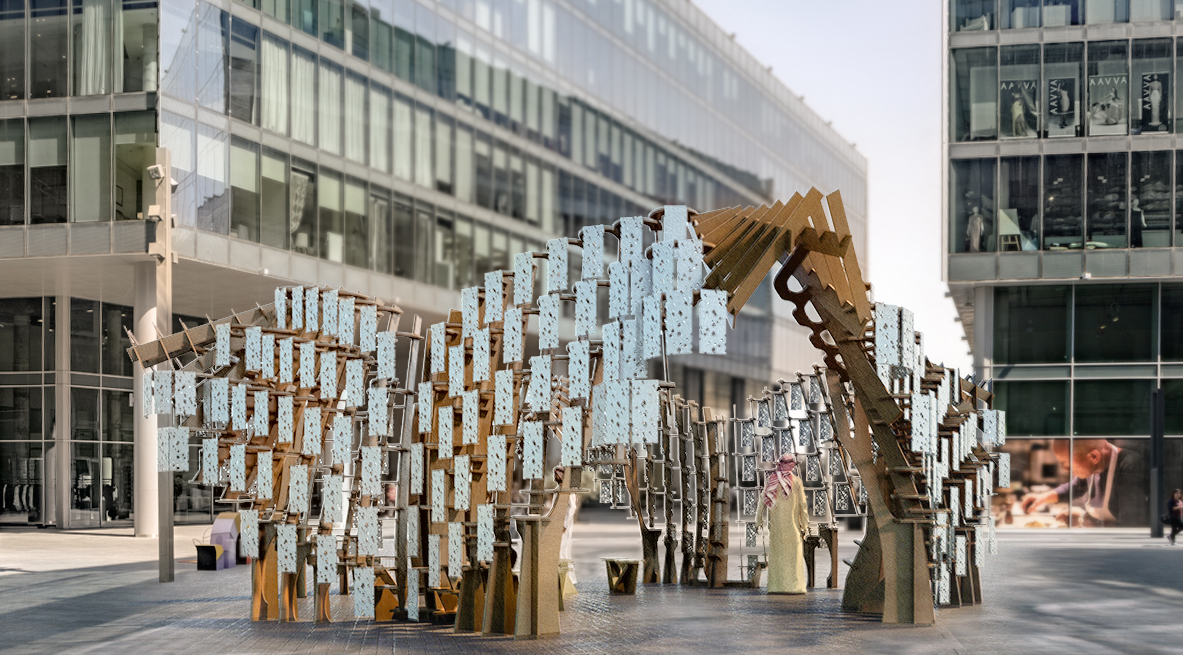
What Is Symbiogenic Architecture, And Why It Matters Now?
First, What Does It Mean?
There is a word that does not appear in most architecture school curricula, does not feature in the briefs sent by developers, and rarely comes up in client conversations. Yet it describes, more precisely than any other term we have encountered, the way SAM believes buildings should exist in the world. That word is symbiogenic.
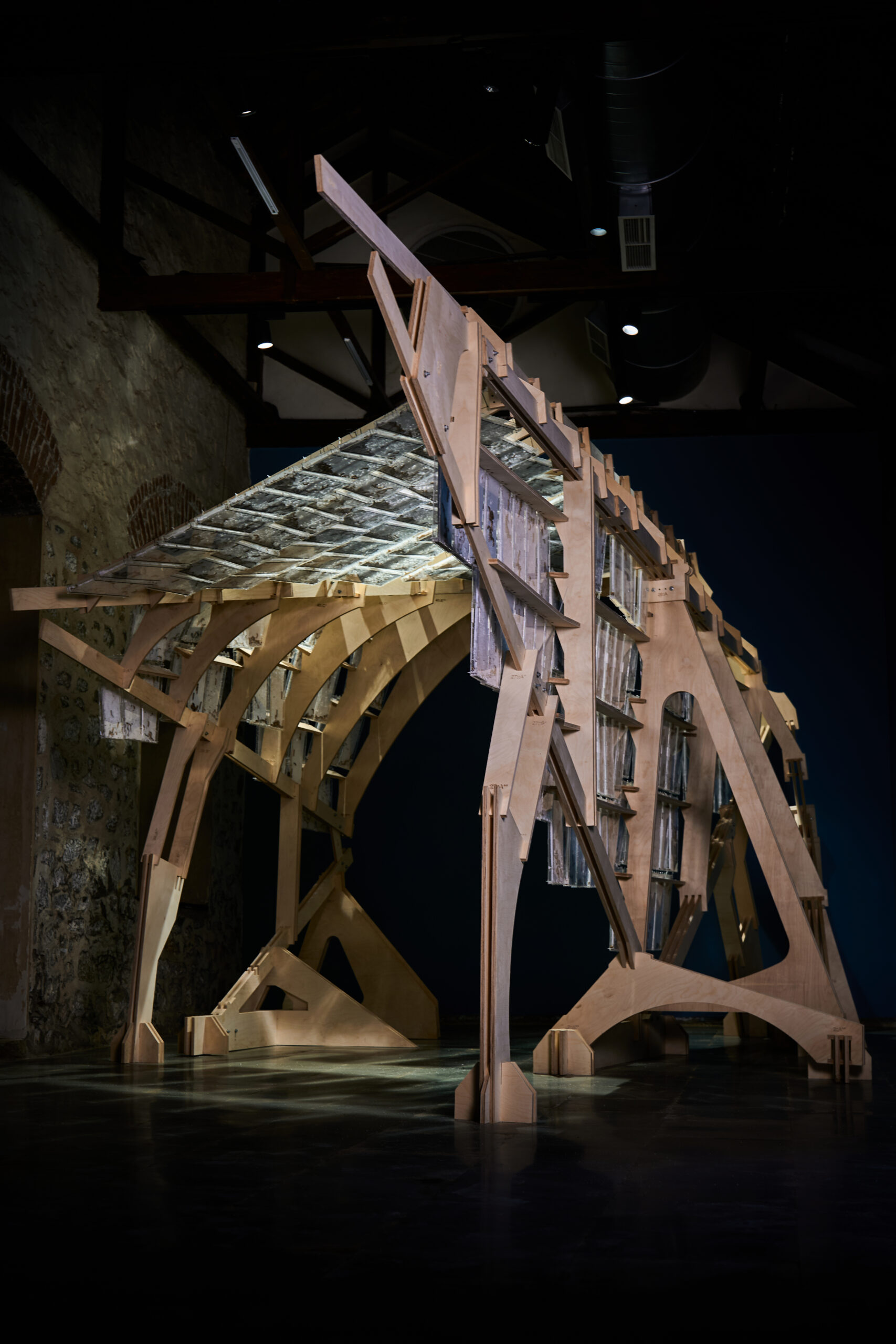
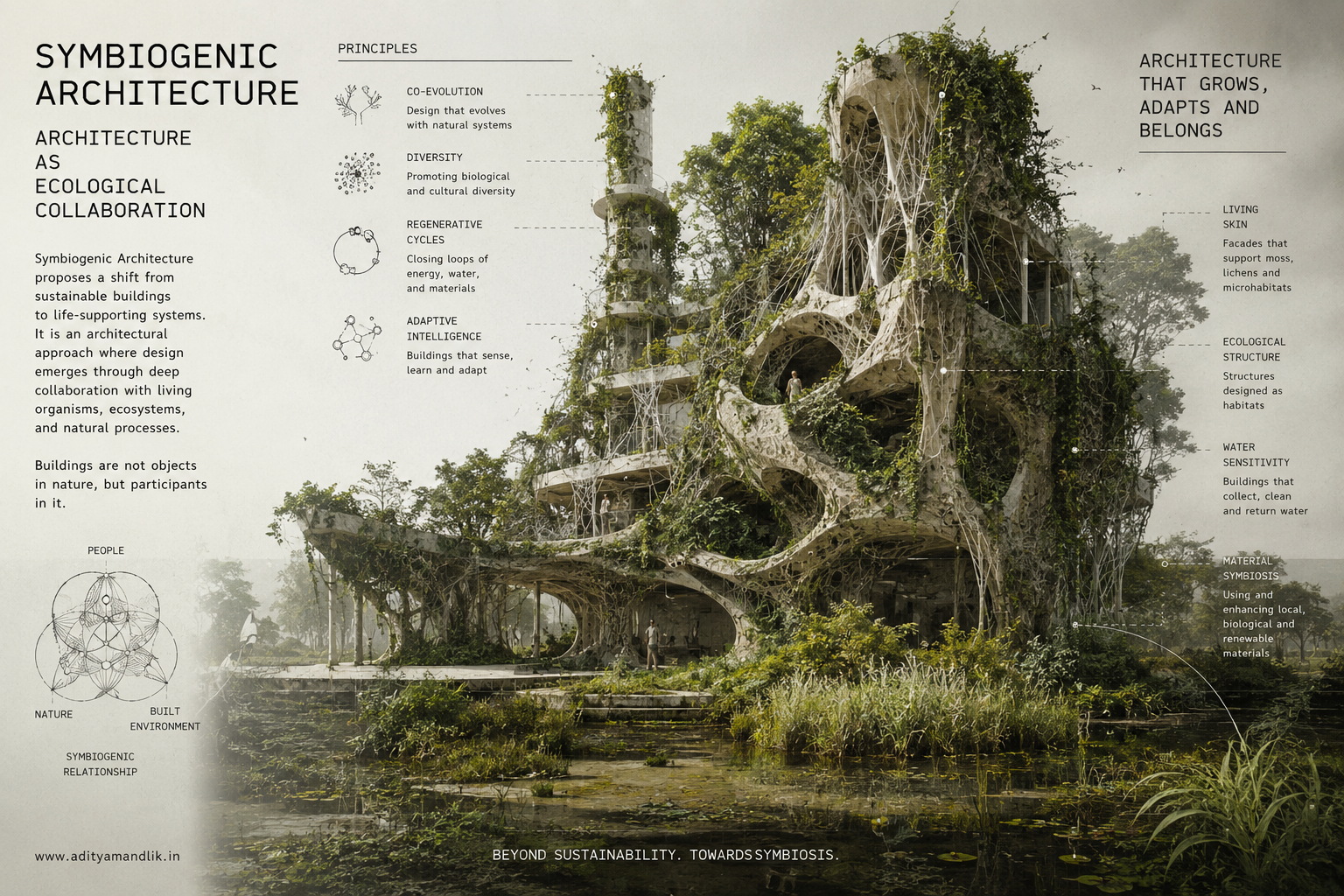
Symbiogenesis is a concept borrowed from biology. It describes the process by which two or more organisms merge over time — not as competition, not as coexistence, but as a genuine integration that produces something neither could become alone. The clearest example is the eukaryotic cell: what we now understand to be the fundamental unit of all complex life on Earth was itself the result of ancient bacteria merging with other microorganisms, each contributing functions the other lacked, until the boundary between them dissolved entirely. In architecture, we use the term differently — but the underlying logic is the same. Symbiogenic architecture is design that refuses the boundary between the built and the natural. It is not about adding plants to a facade or installing a green roof as a gesture toward sustainability. It is about reconceiving the building itself as a participant in its ecological context — something that takes in, transforms, and gives back. Something that ages, adapts, and over time becomes indistinguishable from the landscape it inhabits.
The Problem With How We Currently Build
To understand why symbiogenic architecture matters, it helps to understand what it is responding to. The dominant model of contemporary construction — particularly in rapidly urbanising countries like India — treats the building as a product. It is designed, manufactured, delivered, and placed. The site is a canvas. The environment is a constraint to be engineered around. The natural systems that existed before the foundation was poured — the water table, the soil ecology, the wind patterns, the urban heat exchange — are problems to be solved, not forces to be collaborated with. This is what we call an anthropocentric approach. It places the human programme at the absolute centre of design thinking. Everything else — ecology, climate, material life cycles, non-human inhabitants — is peripheral. It is accounted for only when regulation demands it, or when a client requests it as a feature. The results are visible everywhere. Buildings that are energetically voracious. Neighbourhoods that flood because the ground has been sealed. Cities that are five degrees warmer than the countryside that surrounds them. Interiors that make people ill. Architecture that looks extraordinary in photographs taken on the day of completion and begins its decline from that moment forward. We are not arguing that this happened through malice. The anthropocentric model is simply the inherited logic of industrial modernity — the same logic that produced the internal combustion engine, single-use packaging, and the factory farm. It was enormously productive for a time. It is now visibly insufficient.
Symbiogenesis and the Indian Context
India is a particularly urgent site for this kind of rethinking. The subcontinent has, for millennia, produced architecture of extraordinary ecological intelligence. The stepwells of Gujarat and Rajasthan — the vav — are not merely water storage infrastructure. They are complex microclimatic systems, social spaces, and ecological habitats layered into a single structure. The courtyard typology of the haveli, the ventilated roof forms of vernacular Kerala, the compressed earth construction of the Deccan — these are all, in our reading, expressions of symbiogenic thinking before the term existed. The tragedy of post-independence Indian architecture is not that it abandoned tradition. Tradition should always be questioned. The tragedy is that it abandoned this specific intelligence — the intelligence of negotiation with climate, material, and ecology — and replaced it with an imported model that was designed for entirely different latitudes, resources, and ways of living. We are not arguing for a return to vernacular forms. We are arguing for a recovery of vernacular intelligence — reapplied through contemporary materials, contemporary programmes, and contemporary understanding of ecological systems. Mumbai, where SAM is based, makes this argument unavoidable. A city built on reclaimed land, subject to a monsoon of extraordinary intensity, increasingly exposed to the feedback loops of a warming climate, and home to one of the most complex and resilient informal urban ecosystems on the planet — Mumbai is a place where the anthropocentric model is failing visibly and rapidly. It is also a place where the intelligence needed to build differently has never entirely disappeared. It lives in the way informal settlements manage water. In the way chawl courtyards create microclimates. In the way the city’s residents adapt space with a speed and creativity that formal architecture rarely achieves.
What This Means for a Project
When a client comes to SAM — whether for a residence, a commercial interior, a pavilion, or an urban strategy — the conversation begins in a specific place. Not: What do you want the building to look like? But: What does this site want to become? That is not mysticism.
It is a method. Before a line is drawn, we read the site — its orientation, its ecological history, its relationship to water, its material character, its position within a larger urban metabolism. We treat the brief as a starting point for negotiation rather than a fixed instruction. We ask what the programme requires, what the site offers, and where those two things can be brought into productive tension. The result, in the best cases, is a building that feels inevitable. Not imposed. Not placed. But grown — as if it could not have existed anywhere else, or in any other form. That feeling is not accidental. It is the signature of symbiogenic design.
Why It Matters Now
We are writing this in 2026. The evidence that the anthropocentric model of development is producing ecological catastrophe is no longer speculative — it is empirical, it is accelerating, and it is unevenly distributed, with the communities least responsible for the crisis bearing its sharpest effects. Architecture cannot solve this alone. But architecture cannot pretend to be neutral either. Every building is a position. Every material choice is a vote. Every decision about how a structure relates to its site, its climate, and its non-human inhabitants is a statement about what we believe the relationship between the human and the natural should be. Symbiogenic architecture is our statement. It is the conviction that the most intelligent, the most durable, and ultimately the most beautiful buildings are not those that dominate their context, but those that enter into genuine dialogue with it.
We think that dialogue is overdue.
Further Reading
- The Symbiotic Planet — Lynn Margulis
- The Eyes of the Skin: Architecture and the Senses — Juhani Pallasmaa
- Thinking Architecture — Peter Zumthor
- Auroville: A Dream Takes Shape — Various Contributors
- Laurie Baker: Life, Work, Writings — Gautam Bhatia
Studio Aditya Mandlik (SAM) is a Mumbai-based architecture and design practice. For project inquiries — hello@adityamandlik.com